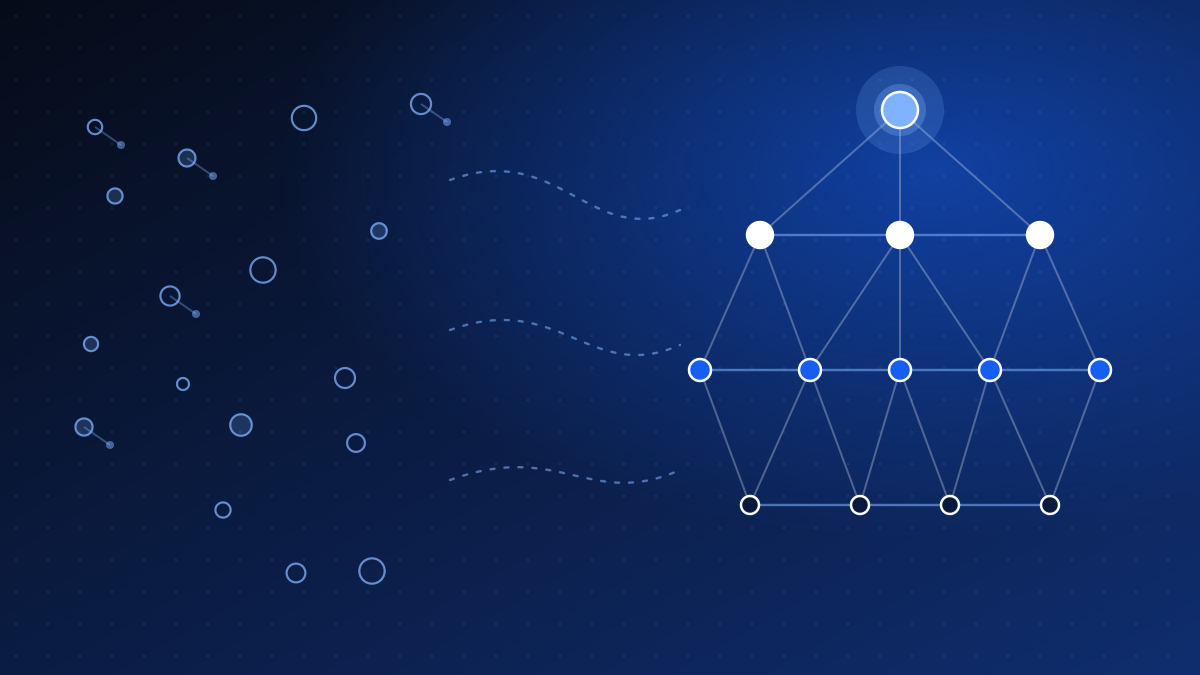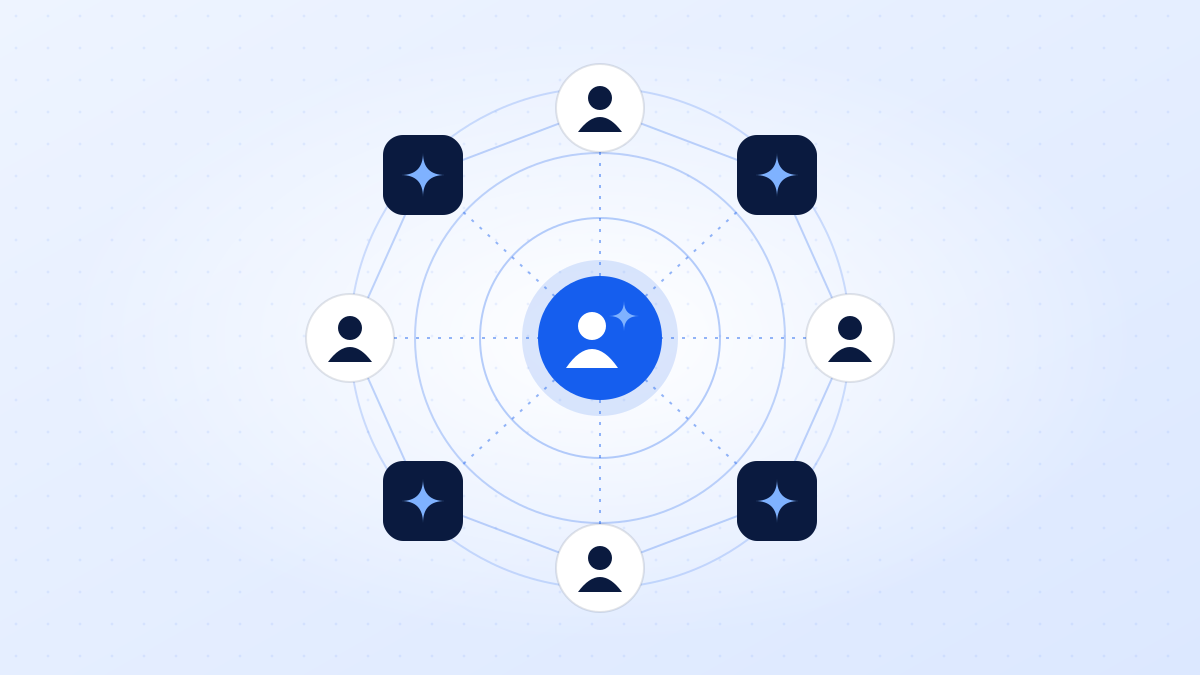
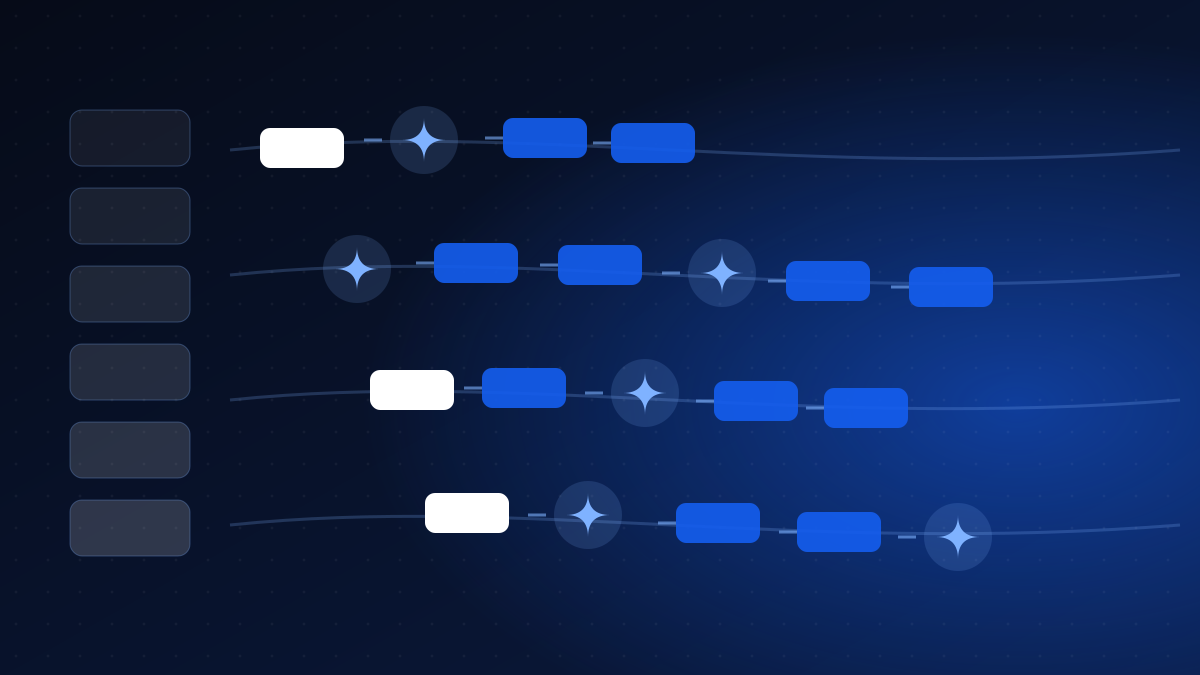
SAFe organisations have a head start on AI that most of them don't use. They already have cadence, a portfolio, value streams and a place where priorities get decided. The mistake is building a separate AI programme next to all that. The opportunity is to run AI through the system you already have, and let it change that system along the way.
If your PI Planning board has a sticky note that just says "AI", that's not a feature. That's a prayer.
I've spent a large part of my career helping enterprises scale agile, including the first SAP Agile Release Train in Germany. So I say this with affection: SAFe organisations are in a surprisingly good position for AI, and many of them are about to waste it.
Here's the usual pattern. The ARTs keep doing their thing. Meanwhile, somewhere near the executive floor, an "AI programme" appears, with its own budget, its own roadmap and its own steering committee. Two operating systems, running side by side, politely ignoring each other. Six months later, everyone wonders why the AI work feels disconnected from the business.
You already own the hard bits
Most organisations struggle with AI because they lack a way to prioritise, fund and deliver cross-team work. SAFe organisations have one. Lean Portfolio Management decides what gets funded. PI Planning aligns teams on a cadence. System Demos show working results. Value streams tell you where the money actually comes from.
That's the infrastructure an AI transformation needs. The trick is to use it, rather than route around it.
“This is the era of the COO: the highest ROI will come from deep operations, not customer-facing AI.”Michael Wade, Professor of Strategy and Digital, IMD — AI trends for 2026
Read that with a SAFe hat on. "Deep operations" is a fancy way of saying "your value streams". The biggest AI gains won't come from a chatbot on the website. They'll come from shortening the time from idea to value inside the trains you already run.
Three moves that make a train AI-native
1. Put AI on the portfolio Kanban, not next to it
An AI initiative should earn its funding the same way any other epic does: a lean business case, a hypothesis, and a measurable outcome. Yes, this is less exciting than an "AI moonshot". It's also how you avoid funding fourteen chatbots.
2. Change what you demo
Nothing kills momentum faster than a System Demo where someone proudly shows that the model's accuracy went from 87% to 91%, and the business owners nod politely while checking their email. Demo the business change: the claim processed in hours instead of days, the forecast nobody had to build by hand.
3. Redesign roles before the agents arrive
When AI drafts the code, writes the test cases and summarises the PI objectives, the work of the people around it changes. Product managers spend more time deciding and less time writing. Scrum Masters coach teams of humans and agents. If nobody has thought about this before the tools land, the team will work it out by itself, usually badly and in a hurry.
Can every AI-related objective on the board name the business outcome it changes, and the person who owns that outcome? If not, it's an experiment. Experiments are fine. Just don't call them a transformation.
Where to start
Pick one value stream where the waiting hurts most. Map it honestly, including the parts nobody likes to draw. Decide where AI should inform, draft or act, and which roles change as a result. Then run it through your next PI, with a business owner who cares about the result.
SAFe gave you the rails. AI is a faster train. The point is still to arrive somewhere useful.
For practitioners who want to go deeper, our AI-Native Value Architect training is built for exactly this, and Leading the AI-Native Organisation is the one-day version for senior leaders.